
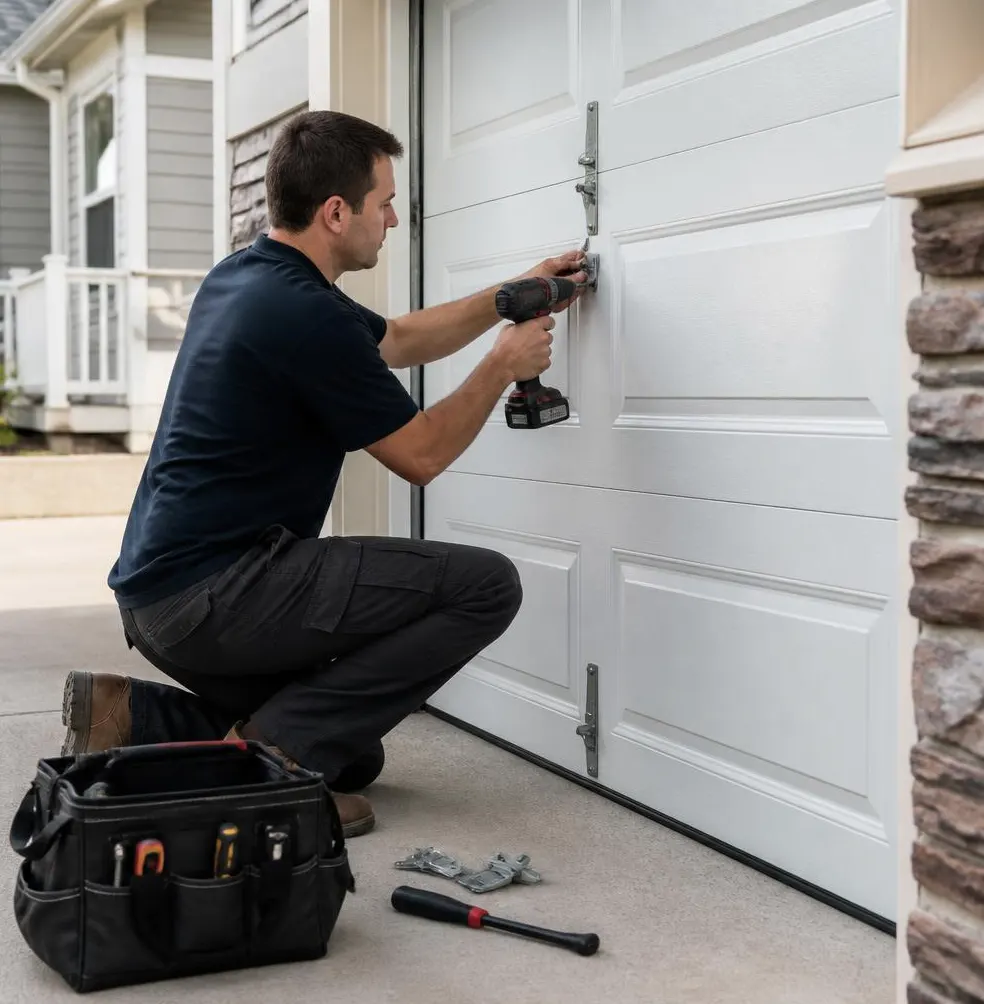
You're three sets into a workout in the converted garage when you feel it: a thin ribbon of cold air sliding under the bottom of the door, right across your feet. Or maybe your spouse is the one who notices — a damp spot spreading across the floor near the workbench after a heavy rain, right where the new flooring meets the door track. That's usually the moment one of you says, "See, I told you we needed to deal with that door," and the other says, "It's fine, it's just a door." It is not just a door anymore. The room on the other side of it changed when you put a squat rack, a drum kit, or a desk in there. The door didn't change with it.
The Door Is Still Doing a Job It Was Never Built For
A standard garage door is designed to keep a car, lawn equipment, and holiday boxes reasonably dry and reasonably warm. "Reasonably" is the key word — a little drift under the bottom seal, a little temperature swing, a little hum from the opener were all acceptable trade-offs when nobody was spending two hours a day standing three feet from the door. Once that space becomes a gym, workshop, office, or playroom, the same small gaps and quirks that used to be background noise turn into the thing everyone notices and argues about.
Three Things That Change the Moment You Convert the Space
- Temperature swings become personal. A door that loses heat in winter or turns into an oven in summer was tolerable for a car. It's a different story when you're trying to lift weights, sand a project, or take a work call in there.
- Moisture shows up where it didn't before. New drywall, flooring, rugs, or equipment give condensation somewhere to land. Humid air meeting a cold metal door panel, especially overnight, can leave a damp film or drip right where you now notice it — on a mat, a tool chest, or a rug instead of bare concrete.
- Weight and balance can shift. If you added an insulated door panel, a retrofit insulation kit, or even just hung storage or a heavy mirror near the door, the springs and opener are now working against a different weight than the one they were originally tensioned for. That shows up as a door that struggles to open smoothly, reverses unexpectedly, or feels heavier when you lift it manually.
What This Looks Like As the Cold Weather Moves In
With winter approaching, the timing matters. Icy conditions and heavy rain are part of the normal season around here, and a converted garage feels every bit of it on the other side of that door. A few things to watch for over the next few months:
- Weatherstripping along the bottom or sides that's gotten stiff or cracked from last winter's cold will let in more drafts than it did even a year ago — rubber hardens with age and temperature cycling.
- Ice can form at the base of the door after freeze-thaw cycles following rain, which both lets in cold air and can actually freeze the door to the floor overnight, straining the opener when it tries to lift.
- Metal panels contract slightly in cold weather, which can make an already marginal seal noticeably worse, and can also change how the door sits on its track, leading to new rattles or scraping sounds you didn't hear last winter.
- Springs work harder in cold temperatures because the metal is less forgiving, so a spring that was already near the end of its life is more likely to show problems — slow opening, a door that won't stay up, or a loud bang — once the temperature drops.
Repair, Reseal, or Replace: The Real Trade-offs
Not every converted-garage door problem needs the same fix, and it's worth knowing the difference before you spend money on the wrong one.
- New weatherstripping or a bottom seal is the cheapest fix and solves drafts and minor water intrusion, but it won't do much for a door that's genuinely uninsulated or warped — you'll feel the difference, but not a dramatic one.
- An insulated retrofit kit or insulated panels address both temperature and some condensation issues, but adding weight to the door means the springs and opener should be checked and possibly adjusted at the same time, or you'll trade one problem for another.
- A full door replacement with an insulated door makes sense if the space is now a real living or working area used year-round, if the existing door is old or already showing rust and wear, or if you're dealing with both temperature and persistent moisture problems that a seal alone won't fix.
The honest answer to most of these arguments is: it depends how seriously the space is being used. A gym you use a few times a week in decent weather has different needs than a workshop you're in daily through a damp winter.
When to Call Arnold Garage Door
If you're noticing drafts, dampness, new noises, or a door that feels heavier or slower than it used to since the conversion, that's the point to get it looked at rather than guessed at. Arnold Garage Door can run a full garage door maintenance check — testing spring tension, inspecting weatherstripping, checking the opener's force settings, and making sure the door is actually balanced for whatever weight it's carrying now. If the springs are struggling under added insulation weight or showing age, spring repair and replacement is the service that actually solves it, rather than just masking the symptom with a new seal. And if the conversation at home has moved from "let's patch it" to "let's just replace the door properly," a straightforward installation conversation with actual weight and climate needs in mind will save a lot of back-and-forth later.
If your converted garage, gym, or workshop in Arnold, Annapolis, Severna Park, Cape Saint Claire, Millersville, Pasadena, Broadneck, or Crownsville is fighting you every time you open the door, give Arnold Garage Door a call — we'll settle the argument for you, one way or the other.